Ensuring Equipotential Bonding
Electrostatic charges (ESD) must not discharge via the system. Devices for discharging must be installed before and after (in the web running direction) the installed system.
In the contact areas of connections, remove the paint as this act as an insulator and prevents equipotential bonding.
- ▶Install conducting connections that permit equipotential bonding of low and high frequencies between the individual machine parts or cable ducts.
- ▶Install ESD discharge devices before and after the installed system.
- ▶Connect all components of the system with the same earth that is connected to the machine.
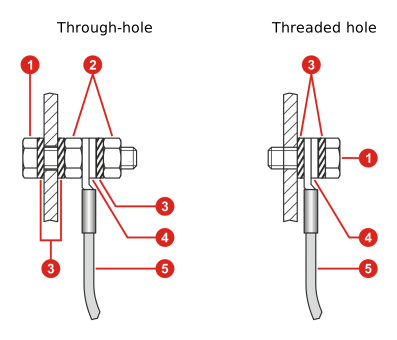
- ▶In the case of screwed connections, use serrated washers to ensure a conducting connection with the unpainted surface (see illustrations).
- ▶Remove the paint coating in the contact area.
Rotate the smartphone by 90 degrees to show the entire table.
① | Screw | ④ | Washer |
② | Nut | ⑤ | Grounding cable |
③ | Serrated washer |
|
|
Establish an equipotential bonding to the housing of the sensor positioner
On each side of the housing (A and B) there is a connection for the equipotential bonding.

- ▶For the connection of a cable ① for the equipotential bonding (wire cross-section 1.5 – 2.5 mm2), use the push-on connector ② supplied.
